Gifting Guide
A guide to choosing thoughtful gifts through meaning, occasion, relationship, and everyday wearability.
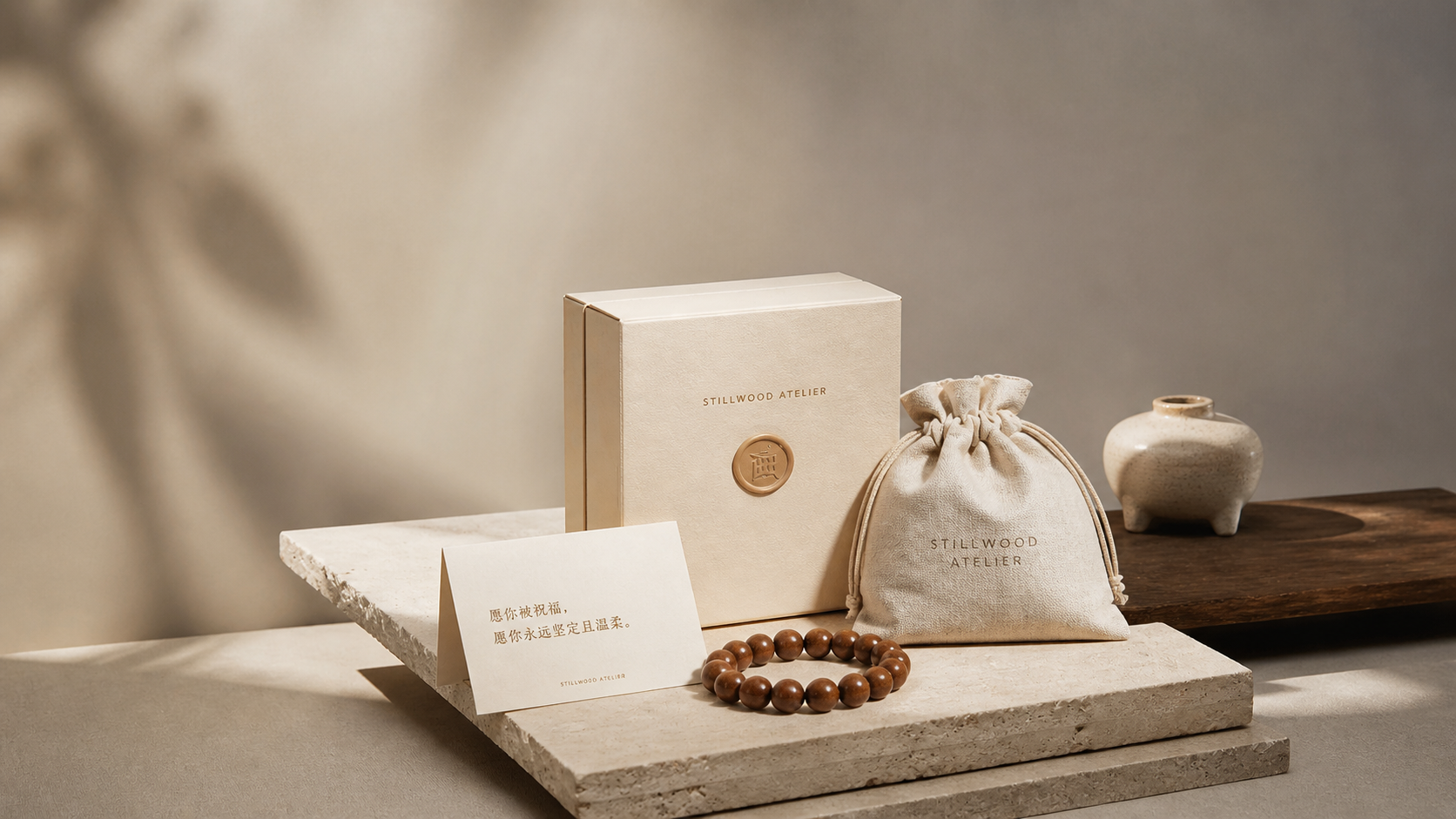
A good gift is not only something beautiful, and it is not only something with the right price. It should make the recipient feel that it was chosen with care, that it relates to them, and that it can naturally enter daily life.
The gifting approach at Stillwood Atelier does not rely on exaggerated blessings or complicated explanations. We care more about whether a gift feels quiet, appropriate, wearable, usable, and able to express a clear intention within a relationship or a moment.
Begin with the relationship
When choosing a gift, the first question is not the product category. It is the relationship between you and the person receiving it. A gift for a partner, friend, family member, colleague, or client should not always speak in the same way.
For a partner, a gift may lean toward companionship, memory, connection, and long-term use. It does not need to be overly grand, but it should feel thoughtfully chosen.
For a friend, the gift can be lighter and closer to daily life. Pieces that are easy to wear, low-pressure, and gentle in meaning are often suitable.
For family, themes such as stability, protection, well-being, and companionship often feel appropriate. The expression does not need to be romantic or dramatic. Reliability and care matter more.
For colleagues or clients, the gift should remain restrained, appropriate, and respectful of boundaries. Avoid choices that feel too private or too heavy in meaning. Simple, durable, and easy-to-understand pieces are often safer.
Consider the occasion
Different occasions carry different emotions. A birthday, New Year, holiday, graduation, new job, moving home, anniversary, thank-you gift, or apology all call for different tones.
Birthday gifts can be more personal, based on the recipient’s style, preferences, and current state. New Year or holiday gifts may lean toward wishes such as stability, growth, smoothness, and new beginnings.
Graduation, career changes, or new stages are suitable for pieces related to growth, direction, courage, and clarity. Moving home or beginning a new life stage may call for grounding, support, and steadiness.
For a thank-you gift, choose something that feels thoughtful without becoming too intimate. The goal is to make the recipient feel appreciated, not burdened.
Use meaning to support expression
Sometimes it is difficult to say exactly what we want to express. Symbolic meaning can help a gift carry part of that message.
Growth may suit someone beginning a new stage. Protection may suit someone facing pressure or change. Balance may suit someone with a demanding rhythm. Clarity may suit someone making decisions or needing focus. Connection and companionship may suit someone close to you.
These meanings do not need to be explained in a complicated way. A simple note can be enough to let the recipient know why you chose the piece.
Think about whether they will use it
No matter how meaningful a gift is, it is harder for it to become part of someone’s life if they will not use it. Before choosing, consider whether the recipient usually wears jewelry, whether they prefer subtle or visible designs, and whether they are more comfortable with metal, beads, wood, or textile details.
If you are unsure, choose something restrained, versatile, and easy to match. Avoid difficult colors, extreme sizing, or meanings that feel too heavy.
For someone who does not often wear jewelry, a small lifestyle object, hanging piece, gift set, or lighter accessory may be more suitable than a highly visible wearable piece.
What to avoid when gifting
Try to avoid gifts that create pressure. This may include items that are too expensive, too private, too symbolic, or too difficult for the recipient to explain.
Also avoid making symbolic meaning sound absolute. Stillwood Atelier pieces may carry wishes, reminders, and memory, but they should not be described as objects that guarantee results.
A gift should express care, not demand. It should make the recipient feel understood, not expected to change.
How to write a gift note
A short and sincere message is often stronger than a long explanation. You might write:
“May this accompany you into a new stage.” “May you keep your own rhythm even in busy days.” “When you see it, I hope you remember that you are supported.” “A quiet reminder, chosen for your everyday life.”
The note does not need to explain every symbol. It only needs to make clear why you chose the gift.
Summary
A good gift does not need to be expensive or complicated. It should suit the relationship, the occasion, the recipient’s lifestyle, and the way it will be used.
Stillwood Atelier hopes a gift is not only beautiful when it is received, but also able to remain visible, wearable, and meaningful in everyday life afterward.